Fire stopping in Paddington
Newer towers by the canal, where seals get disturbed as fast as they go in.
- Every seal labelled and photographed
- BM TRADA / FIRAS-certificated contractors
- Written price before any work
Round Paddington Basin and along the Grand Union Canal, much of what stands now was built in the last twenty-five years. Offices, flats, hotels and shops in concrete framed blocks, many of them tall. Behind the station there are older council and housing association blocks too.
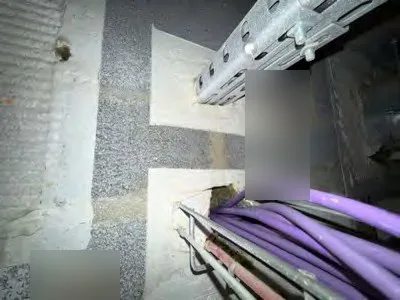
Newer blocks are not finished blocks
A building finished ten years ago will usually have had fire stopping fitted by the original contractor, with labels. Since then:
Tenants on office floors have changed and fitted out again.
Every flat has had broadband installed, often by more than one provider, with cables run up the risers.
Building management systems, CCTV and access control have been upgraded, with new cable through corridor walls.
Leaks have been fixed by plumbers who cut out a section of seal to reach the pipe.
None of those trades is there to do fire stopping, and the seal they disturbed is often left open.
Start with the records
In a newer building the useful first step is to find the original fire stopping schedule, usually in the operation and maintenance manuals from handover. An inspection of the risers and voids against that schedule shows what has changed.
Some of these blocks are higher-risk buildings under the Building Safety Act, 18 metres or seven storeys and up with at least two homes. Owners of those need to keep their information about the building up to date, and fire stopping records are part of it.
Older blocks
Behind the station, the older blocks have concrete floors, refuse chutes and risers off the landings, with the usual gaps round replaced pipes and newer cables.
Sealing is done by our BM TRADA / FIRAS-certificated contractors.
Tell us the street, what the building is used for and send a photo. We will say what it needs and roughly what it costs.